In short
The premium for wellness real estate is no longer justified by a high-end gym and spa. Today’s buyers expect a sophisticated, integrated ecosystem of services that supports their long-term health, moving beyond standalone facilities to a professionally managed, service-led model. Developers must focus on the operating business, not just the building, by integrating clinical partnerships, preventative health programmes, and dedicated wellness staff. This shift from hardware to human-centric service is what creates durable asset value and justifies the “wellness” label. Without a viable, long-term service and care model, even the best-designed properties are just conventional real estate with a large wellness-themed liability.
Key takeaways
- The value of wellness real estate now lies in the integrated service model, not just the physical amenities like spas or gyms.
- Successful projects require a shift in developer mindset from construction and sales to long-term service provision and operations.
- Effective wellness residences integrate clinical health and preventative medicine, moving far beyond simple fitness and relaxation.
- Long-term resident engagement and sustained service utilisation are the true measures of success, not the initial property sale.
- Without a robust, professionally managed operating model for wellness services, these assets risk becoming costly liabilities rather than value drivers.
''' After two decades of advising on wellness-led real estate projects in Asia, we see a recurring and expensive mistake. Developers invest heavily in state-of-the-art gyms, spas, and relaxation lounges, brand the project "wellness," and then stop. They treat wellness as a facilities list to be handed over at completion. The result? Within a few years, these multi-million-dollar amenities are underutilised, the "wellness" promise feels hollow, and the premium paid by residents becomes a point of contention. The market has matured. True wellness real estate is not about the hardware; it is about the integrated service ecosystem that supports resident health for years to come. It is an operating business, not a one-time construction project.
Why Are Standalone Wellness Amenities Failing Residents?
Answer-first: Standalone amenities fail because they are passive and disconnected from the structured, professionally guided support that people need to make meaningful health improvements. A beautiful gym does not create a fitness habit, and a serene spa does not resolve chronic stress or manage long-term health.
Real engagement in wellness is driven by programming, professional guidance, and a sense of community. Residents may use a pool or gym for a few weeks, but without structured classes, personal coaching, and proactive health management, participation drops off. This is a classic operational failure. We often see residential projects where the developer’s business case projected high utilisation for its wellness facilities. In reality, after the initial novelty wears off, these spaces are empty for most of the day. This is because the developer sold a facility, but the resident needed a service. For a deeper dive into repositioning projects with misaligned models, our work on Stratix Business Hacking shows how to diagnose and correct these core business issues.
What Does an Integrated Wellness Service Model Look Like in a Residence?
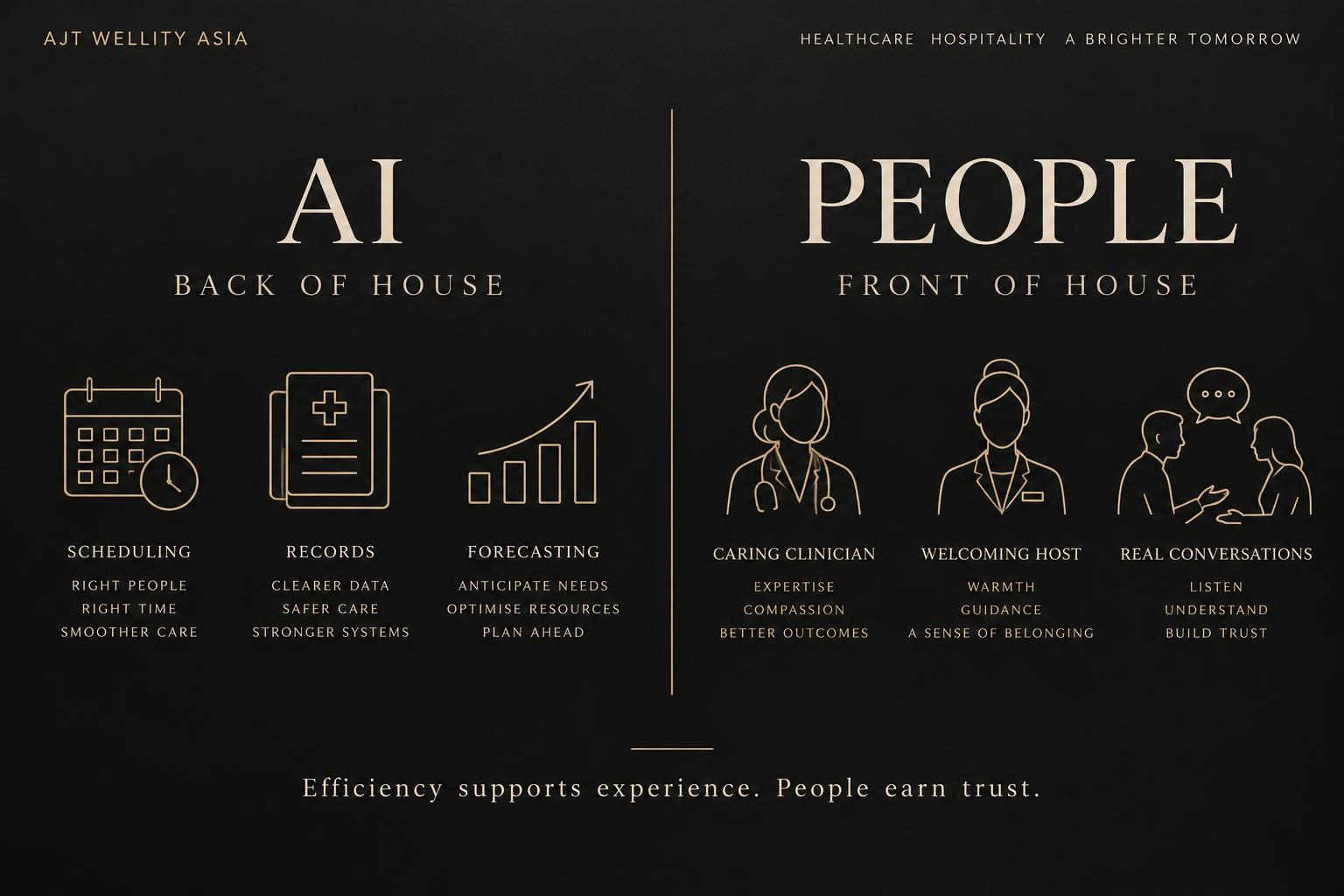
An integrated model combines hospitality, clinical services, and community programming under a single, professionally managed structure. It shifts the focus from passive amenities to proactive, personalised care delivered by a dedicated team.
This operating model is the true "wellness" asset. It might include:
- A Dedicated Wellness Director: A professional responsible for curating programmes, managing practitioners, and acting as a primary point of contact for residents.
- On-site Health Assessments: Regular check-ins for biometrics, movement patterns, and stress levels, forming the basis for personalised programme recommendations.
- Curated Clinical Partnerships: Relationships with vetted local or international clinics for services like diagnostics, preventative screenings, and specialist care, often managed through a concierge.
- Structured Programming: A full calendar of activities including group fitness, yoga, meditation, nutrition workshops, and educational health talks.
- Preventative Health Programmes: evidence-informed programmes focused on longevity, metabolic health, or stress reduction, moving beyond simple fitness. This is where expertise in Sustainable Wellness & Environmental Medicine becomes critical to delivering credible outcomes.
In a recent project in Bali, a branded residence developer moved from a simple gym and spa model to one that included a resident wellness director and a partnership with a nearby longevity clinic. The result was a 40% (industry estimate) increase in resident participation in wellness activities and the ability to command a higher, more defensible service charge.
How Do Developers Fund and Operate These Services Post-Handover?
Funding and operating long-term wellness services require a fundamental shift in the developer’s business model, moving from a pure "build-and-sell" to a "build-and-serve" mindset. The cost of wellness cannot be an afterthought; it must be integrated into the core financial structure of the project.
There are a few primary models:
- Mandatory Service Charges: A non-negotiable monthly or annual fee included in the homeowners' association (HOA) dues. This provides a stable, predictable revenue stream to fund baseline staff and programming.
- Hybrid "Base plus Pay-to-Play": A lower mandatory fee covers the core infrastructure and a limited set of group activities, while personalised services (coaching, clinical consultations, specialised treatments) are paid for on an à la carte basis.
- Third-Party Operator Agreement: The developer contracts a specialist firm for integrated hospitality and wellness management to run the entire wellness offering, often under a management fee and revenue-sharing structure. This ensures professional execution but requires careful selection and oversight.
The key is financial transparency with buyers from day one. They are not just buying real estate; they are buying into a serviced community. The costs and benefits of that service must be clearly articulated and justified.
What Is the Real ROI on Integrated Wellness Real Estate?
The return on investment for integrated wellness real estate extends far beyond a one-time sales premium. While wellness-branded residences can command a 10-25% price premium (industry estimate), the durable value lies in long-term asset performance and market resilience.
Properties with robust, integrated wellness models see:
- Higher Resale Values: The wellness ecosystem becomes a core part of the asset's value proposition, differentiating it from conventional properties.
- Increased Resident Retention: In a rental or mixed-use context, a valuable wellness programme reduces churn and vacancy.
- A More Defensible Brand: The "wellness" claim is backed by a tangible, high-quality service, protecting the developer's reputation.
- Ancillary Revenue Streams: Pay-to-play services can create a profitable secondary business within the development.
Ultimately, failing to plan for the long-term operation of wellness services is the single biggest threat to the value of these assets. A magnificent spa that sits empty is not a wellness asset; it is a maintenance liability. The future of wellness real estate belongs to developers who understand they are in the business of human-centric service, not just concrete and glass. If you are a developer or investor exploring how to structure a viable wellness service model, you can contact AJT Wellity Asia to scope your project's operational and financial feasibility. '''
Frequently asked questions
Isn't a high-end spa and gym enough to attract buyers to a luxury wellness property?
While a high-end spa and gym were once sufficient, the market has matured. Today's discerning buyers see these as standard luxury amenities, not a comprehensive wellness solution. True value and the justification for a premium lie in integrated programming, professional guidance, and proactive health services that support residents' long-term wellbeing. Without a robust service layer that drives engagement and outcomes, expensive facilities often suffer from low utilisation, failing to deliver on the wellness promise and potentially becoming a financial drain on the homeowners' association.
How can we ensure residents will actually use the wellness services we offer?
High utilisation is driven by proactive engagement, not passive access. Success depends on a dedicated wellness team, led by a director who actively onboards residents, conducts health assessments, and prescribes personalised programmes. Consistent, high-quality group classes, educational workshops, and community-building events are also critical. Instead of just providing a facility, the model must be built around a service that pulls residents in, demonstrates value, and integrates into their daily lives. It requires an operational budget for staffing and programming, not just a capital budget for construction.
What is the biggest financial mistake developers make with wellness real estate?
The most significant financial mistake is funding wellness amenities entirely through CAPEX without a corresponding, sustainable OPEX model for post-handover operations. Developers often focus on the upfront "wow factor" of facilities to drive sales, but they fail to structure a long-term business plan to fund the programming and expert staff needed to run them. This leads to a situation where the homeowners' association is burdened with high maintenance costs for underused spaces. A successful project integrates service charges or other revenue streams from the very beginning to ensure the wellness promise remains viable for years.