
In short
Destination medical wellness properties cannot be managed using traditional hotel spa metrics. Success requires treating the asset as an integrated clinical-hospitality ecosystem where revenue is driven by programme completion velocity, provider productivity, and total pathway yield rather than treatment room hourly utilization. By controlling clinical labour density, avoiding excessive hardware CAPEX, and pricing outcome-focused protocols instead of a la carte menus, developers and hotel owners across Asia can achieve healthy departmental EBITDA margins of 20% to 30% and capital payback within four years.
Key takeaways
- Traditional hotel spa metrics fail because medical wellness profitability depends on guest journey completion and protocol conversion rather than hourly room utilization.
- Clinical payroll and diagnostic COGS represent fixed structural overheads that require minimum active daily patient thresholds to maintain 20% departmental EBITDA margins.
- High equipment CAPEX creates balance sheet drag, whereas agile diagnostic infrastructure paired with multi-day outcome programmes accelerates capital payback within four years.
- Mastering guest journey handoffs between intake doctors and treatment teams prevents the mid-stay drop-offs that destroy programme profitability.
After working on wellness businesses for many years across Asia, one thing we continue to see is that owners and developers calculate payback based on treatment room square metres rather than guest journey velocity. They treat medical wellness like luxury retail or high-end spa operations, building extensive treatment suites, buying diagnostic devices, and expecting walk-in or transient guests to fill schedules by the hour.
This approach systematically fails. In high-performance medical wellness properties, profitability does not originate from selling individual ninety-minute slots. Profitability comes from mastering the physics of guest commitment: initial assessment conversion, programme completion discipline, and structured longitudinal follow-up that converts an overseas stay into year-round engagement. When an asset manager fails to model throughput, clinical labour density, and programme drop-off points, even a facility boasting ninety percent treatment room occupancy can lose money. Understanding the true unit economics of destination medical wellness is what separates scalable clinical-hospitality operations from capital-draining vanity projects.
Why do standard hotel spa financial metrics fail in medical wellness?
Standard hotel spa metrics fail because they track hourly physical capacity utilization instead of clinical programme margin, provider productivity, and total protocol yield. Traditional spas measure RevPATR (Revenue Per Available Treatment Room) and therapist utilization rates across forty-five to ninety-minute massages, relying on low-cost products and transient hotel guest footfall.
Medical wellness operations function under completely different structural dynamics:
- Fixed clinical overhead: Licensed medical directors, registered nurses, functional nutritionists, and certified physiotherapists command professional salaries and regulatory compliance costs that cannot be flexed up or down like on-call massage therapist rotas.
- Variable diagnostic input costs: Advanced blood chemistry panels, genomic sequencing, epigenetic age diagnostics, and intravenous micronutrient packs represent direct cost of goods sold (COGS) ranging between twenty and thirty-five percent (industry estimate).
- Room dwell time vs. clinical interpretation: A patient does not merely occupy a room for therapy; licensed staff must spend thirty to sixty minutes reviewing diagnostic panels, synthesizing health dossiers, and adjusting protocols outside the treatment hour.
- Programme bundling dynamics: Revenue must be evaluated on a complete care pathway (for example, a three-day metabolic reset or a seven-day neuro-recovery journey) rather than standalone a la carte appointments.
When asset owners attempt to run a medical clinic using traditional spa key performance indicators, they inevitably underprice physician consultation time, overbuild underutilized specialized procedural rooms, and incentivize staff to sell disjointed single treatments that fail to deliver tangible health outcomes. Establishing structural viability requires an uncompromised financial architecture rooted in rigorous business modelling and feasibility, where pricing reflects total care coordination rather than room rental minutes.
How do you calculate the actual revenue yield per square metre?
You calculate real revenue yield by dividing net programme contribution margin by the total footprint required to deliver that programme, incorporating both clinical consultation suites and non-revenue diagnostic infrastructure.
Too many developers look only at the physical dimensions of the treatment room, assuming an eight-square-metre therapy room produces the same revenue density as an adjacent suite. In reality, medical wellness requires substantial back-of-house support: clean preparation areas, refrigerated medication storage, waste management, phlebotomy stations, and private doctor consult rooms.
| Asset Component | Typical Space Allocation (sqm) | Primary Cost Drivers | Revenue Realization Mechanism |
|---|---|---|---|
| Comprehensive Diagnostic Suite | 25 - 40 | High CAPEX bio-impedance, autonomic nervous system, ultrasound | Upfront comprehensive intake fee ($800 - $2,500) |
| Infusion & Regenerative Lounge | 40 - 60 | Certified nursing labour, specialized consumable COGS | High-volume multi-seat throughput ($250 - $650/session) |
| Private Physician Consult Room | 16 - 22 | Senior clinician payroll, charting time | Programme prescription and targeted protocol conversion |
| Integrated Movement Therapy | 60 - 100 | Biomechanical equipment, exercise physiologists | Daily multi-patient functional rehab and somatic coaching |
To accurately benchmark yield, asset managers must measure Revenue per Square Metre of Total Clinical Footprint (RevPACF). If an operator generates $1,200 per square metre annually on treatment rooms but requires an equal area of non-revenue regulatory space that produces zero direct billings, the effective estate yield drops by half. High-performing assets in Thailand, Singapore, and Japan maximize this equation by designing multi-functional intake pods and centralizing clinical diagnostics so treatment suites maintain continuous, high-margin therapeutic flow.
Where do guest journeys break, and how does drop-off destroy margins?
Guest journeys break at the handoff between diagnostics and therapeutic execution, creating customer drop-off that destroys the projected lifetime value of the guest.
In an underperforming resort clinic, the intake doctor orders extensive tests on day one. By day three, when lab markers return, the guest is overwhelmed by complex medical terminology, receives a disjointed forty-page binder, and is offered an expensive list of disconnected therapies. Without structured clinical navigation, the guest opts for a simple massage, skips the recommended IV therapies, and checks out feeling that the experience was commercially aggressive rather than therapeutically coherent.
The commercial impact of this journey friction is severe:
- Assessment-to-programme conversion collapse: When the physician acts as an academic rather than a clinical communicator, conversion from baseline assessment to an intensive multi-day protocol drops below forty percent (industry estimate: high-performing benchmarks exceed seventy-five percent).
- Mid-stay attrition: Guests who experience detoxification discomfort or fatigue without daily clinical reassurance abandon therapies on day four or five of a seven-day retreat.
- Inventory spoilage: Specialized peptides, intravenous compounds, and cell therapies ordered for bespoke pathways expire or sit unbilled in medical refrigerators.
- Zero post-stay engagement: If the exit consultation fails to provide a seamless six-month maintenance plan with remote digital check-ins, the property loses the recurring subscription, home-delivery nutraceutical, and return-visit revenue that defines top-tier medical wellness operations.
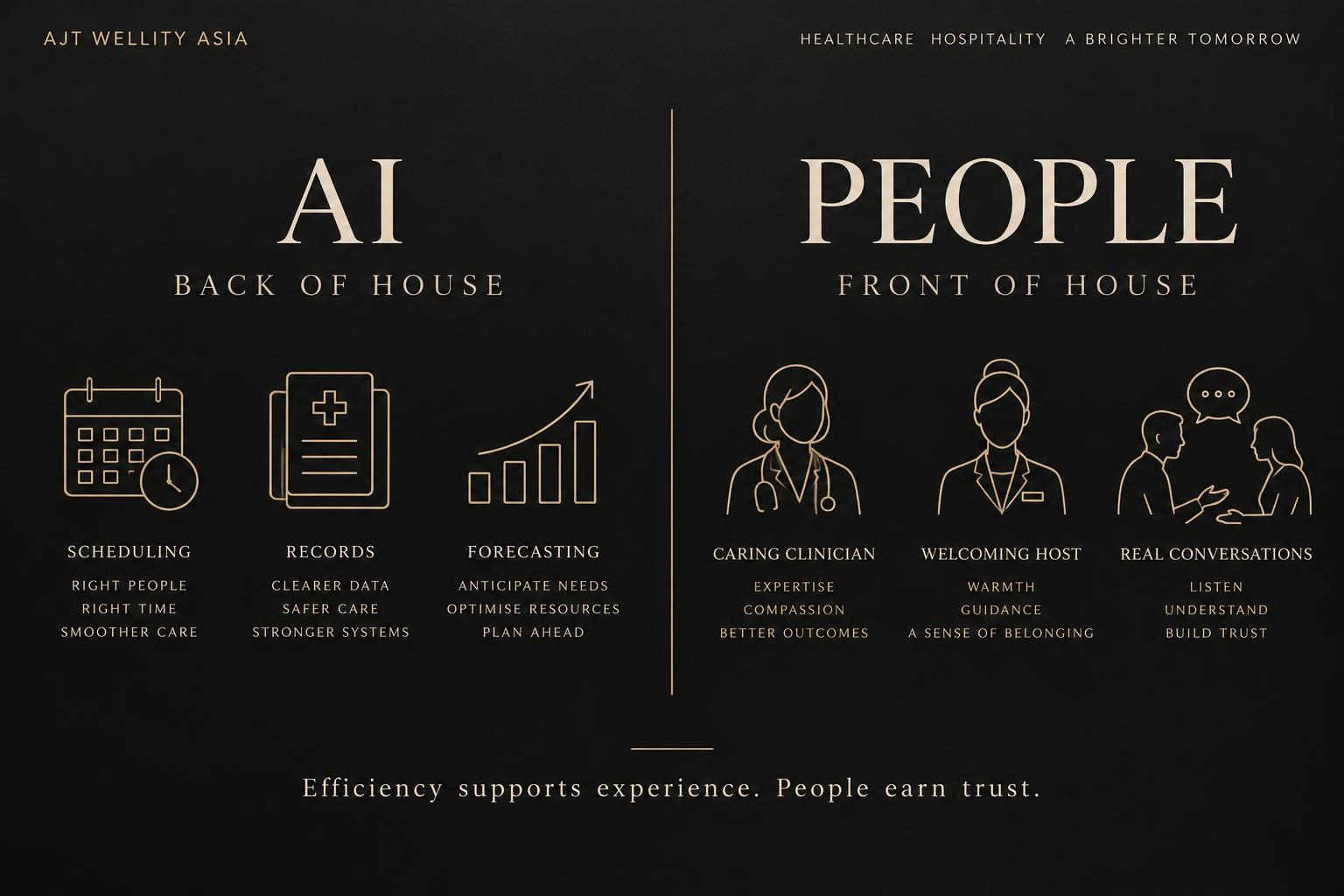
Solving this breakdown requires operators to unify clinical science with high-touch hospitality. Properties executing integrated hospitality and wellness operations deploy trained clinical concierges who guide the guest through every milestone, explaining the physiological mechanism behind each therapy and adjusting protocols in real time to ensure completion.
How does clinical labour density impact EBITDA margins?
Clinical labour density impacts EBITDA margins because licensed medical professionals represent fixed costs that can rapidly exceed forty-five percent of wellness department revenue if client throughput drops below critical thresholds.
A luxury resort spa can manage therapist payroll at twenty to twenty-eight percent of spa revenue by utilizing base salaries coupled with service commissions. In contrast, destination medical wellness facilities in jurisdictions such as Singapore, Korea, or the Middle East must employ licensed general practitioners, anti-aging specialists, and registered nurses who require competitive fixed compensation packages regardless of daily patient counts.
``` Illustrative Medical Wellness Departmental P&L (Annual Basis)
Total Departmental Gross Revenue: 100.0% ($2,500,000) ------------------------------------------------------------------ Direct COGS (Diagnostics, IVs, Peptides): 18.5% ($462,500) Clinical Fixed Payroll (Doctors, Head Nurses): 24.0% ($600,000) Therapist & Nursing Variable Payroll: 14.5% ($362,500) Administrative & Concierge Operations: 6.0% ($150,000) Medical Licensing, Compliance & Malpractice: 3.5% ($87,500) Marketing & Educational Client Acquisition: 8.5% ($212,500) Operating Supplies & Facility Maintenance: 5.0% ($125,000) ------------------------------------------------------------------ Departmental EBITDA: 20.0% ($500,000) ```
To protect departmental EBITDA, operators must establish a strict clinician-to-patient ratio. In our operational audits across Asia, a single full-time doctor must support a minimum active daily caseload of six to eight comprehensive programme guests, supplemented by nursing staff conducting protocol execution.
If occupancy drops and the clinic sees only two or three guests daily, clinician payroll instantly consumes the entire gross margin of the department. Operators must calibrate their staffing models to balance permanent core clinical directors with cross-trained allied health professionals who can shift between diagnostics, intravenous monitoring, and therapeutic bodywork.
What programme pricing structures actually work across Asia?
The programme pricing structures that actually work across Asia are tiered, outcome-driven packages that decouple medical expertise from hourly rates and bundle high-perceived-value diagnostics with physical hospitality inclusions.
Transparent a la carte clinical pricing invites unhelpful price comparisons with domestic metropolitan clinics. A high-net-worth individual from Jakarta or Hong Kong will not pay $500 for a routine blood panel at a resort in Phuket or Bali if they know their private physician at home charges $150. However, they will gladly pay $6,500 for a five-day precision longevity protocol that integrates multi-omic profiling, daily targeted cellular infusions, specialized hyperbaric oxygen therapy, metabolic conditioning, and tailored medical nutrition.
Three specific pricing models consistently yield sustainable margins in Asian destinations:
- The Foundation Anchor (Entry Level): A mandatory three-night health diagnostic and rebalancing pathway priced between $2,200 and $3,500 per person, excluding accommodation. This captures resort guests who did not travel primarily for medical intervention but want an authoritative baseline health audit.
- Targeted Intensive Protocols (Core Driver): Seven to fourteen-night specialized journeys focusing on metabolic syndrome, cardiovascular optimization, or neuro-cognitive resilience, priced from $7,500 to $18,000. These programmes maintain seventy percent gross margins by leveraging high-margin physiological therapies alongside personalized clinical guidance.
- Longitudinal Concierge Retainers (Post-Stay Extension): Twelve-month remote metabolic tracking contracts priced between $3,600 and $8,000 annually. Through structured partner ecosystems such as Wellity Concierge and regional clinical networks, properties deliver blood monitoring, functional supplement shipments, and tele-consultations that keep the client tethered to the destination brand until their next physical stay.
These structures shift the conversation from transactional expense to transformative personal investment, insulating the property from seasonal discounting and standard room rate volatility.
What is the true capital payback period for medical wellness assets?
The true capital payback period for a destination medical wellness facility ranges between 3.5 and 5.5 years, provided the asset avoids over-investing in rapidly depreciating aesthetic machinery and under-investing in guest acquisition pipelines.
Developers frequently blow out payback timelines by falling in love with shiny medical hardware. Spending $1.5 million on cryotherapy chambers, robotic rehabilitation rigs, and multi-wavelength laser beds without an established patient base creates immediate balance sheet distress. Medical technology in the longevity space depreciates rapidly; hardware that is cutting-edge today often faces technological obsolescence within forty-eight months.
``` Payback Trajectory Comparison (Initial CAPEX: $3.0M USD)
Year 1: Hardware-Heavy Model: -$450,000 EBITDA (High depreciation, low utilisation) Disciplined Protocol: +$180,000 EBITDA (Core diagnostics, strong conversion)
Year 2: Hardware-Heavy Model: +$120,000 EBITDA (Heavy marketing required to fill devices) Disciplined Protocol: +$650,000 EBITDA (Repeat visits, word-of-mouth validation)
Year 3: Hardware-Heavy Model: +$400,000 EBITDA (Device maintenance costs rise) Disciplined Protocol: +$1,100,000 EBITDA (Full capacity utilisation, retainer income)
Year 4: Hardware-Heavy Model: +$600,000 EBITDA (Unrecovered CAPEX: $1.83M) Disciplined Protocol: +$1,350,000 EBITDA (Full CAPEX amortized: Breakeven reached) ```
The disciplined approach limits initial medical equipment CAPEX to versatile, evidence-informed diagnostic and therapeutic infrastructure. Capital is allocated instead toward creating exceptional consultation environments, seamless software systems for clinical charting, and training hospitality teams in medical privacy standards. Payback accelerates because capital is tied to programmes that drive room nights, extended lengths of stay (seven to fourteen nights versus the regional resort average of 2.8 nights), and off-peak occupancy resilience.
How do you transition from an amenity mindset to an integrated commercial business?
To transition from an amenity mindset to an integrated commercial business, developers must stop subordinating the wellness director to hotel rooms division and establish wellness as a co-equal operational driver with direct profit-and-loss accountability.
When a clinic operates as an amenity, general managers treat it as a cost centre designed to validate marketing brochures and justify premium room rates. The results are predictable: front-desk staff have no understanding of the clinical programmes, food and beverage teams serve inflammatory meals directly conflicting with clinical prescriptions, and the clinic manager spends their budget defending against operational cuts.
Creating a viable business requires five immediate structural interventions:
- Redefine executive reporting: The wellness or clinical director must report directly to the asset owner or managing director, operating with autonomous departmental revenue and margin targets.
- Harmonize hospitality touchpoints: The executive chef must work under the clinical nutritionist to ensure menus reflect the anti-inflammatory, low-glycemic principles promised in the medical intake.
- Cross-train frontline teams: Villa hosts, guest relations staff, and concierge teams must be educated on health concepts so they can comfortably identify qualified guest inquiries and explain protocol benefits without sounding clinical or defensive.
- Align commercial incentives: Sales teams must receive commission structures that incentivize selling high-value, multi-day medical wellness programmes rather than pushing discounted room-only inventory during low seasons.
- Measure diagnostic-to-revenue ratios: Track the exact revenue generated per diagnostic test performed, monitoring how successfully initial assessments lead to full-course therapies.
The commercial consequence of getting this wrong is severe: an empty, multi-million-dollar clinical asset that drains operational cash flow, alienates hotel guests with confusing messaging, and damages the broader reputation of the property. When executed with financial discipline, clinical integrity, and operational coherence, destination medical wellness generates industry-leading margins and insulates hospitality assets against broader economic shocks.
If you are evaluating the commercial feasibility, clinical staffing ratios, or departmental economics of a planned or existing medical wellness asset in Asia, contact AJT Wellity Asia to scope your project.
Frequently asked questions
Why can you not use RevPATR to measure medical wellness performance?
Spa metrics like RevPATR track hourly room bookings with low product costs and casual labour. Medical wellness involves high clinical salaries, regulatory overhead, specialized lab testing costs, and pre-consultation charting time. Tracking hourly room occupancy rather than complete programme yield, diagnostic-to-treatment conversion, and provider productivity creates structural financial deficits.
What is a realistic departmental EBITDA margin for a medical wellness asset?
High-performing destination medical wellness facilities in Asia achieve departmental EBITDA margins between 20% and 32% (industry estimate). This requires strict clinical labour density control, bundled outcome-based programme pricing, minimal reliance on depreciating hardware, and high assessment-to-programme conversion rates above 70%.
What is the ideal doctor-to-patient staffing ratio in a destination wellness resort?
The optimal ratio is one full-time clinical doctor for every six to eight active daily intensive programme guests, supported by cross-trained registered nurses and allied wellness therapists. Allowing clinician caseloads to fall below four active patients daily rapidly pushes clinical payroll above 40% of gross revenue, wiping out operating margins.
Which pricing structure yields the highest margins: a la carte or bundled packages?
Targeted, multi-day outcome packages ($3,500 to $12,000) deliver the highest margins because they bundle diagnostics, clinical consultations, and therapeutic interventions into a single non-comparable price point. A la carte treatments invite unhelpful price comparisons with domestic metropolitan clinics and suffer from high mid-stay drop-off rates.