
Across Asia, a quiet transformation is underway in how healthcare meets hospitality. The concierge clinic, once a niche service for expatriates and executives, is evolving into something far more ambitious: the destination longevity clinic.
From appointments to itineraries
Traditional concierge medicine is transactional. A patient books a consultation, receives diagnostics, and follows a plan remotely. The new generation of longevity clinics in Bangkok, Singapore, and Bali operates differently. They design multi-day programmes that combine advanced diagnostics, regenerative therapies, sleep architecture, nutrition, and recovery, all delivered in hospitality-grade environments.
This shift matters because it changes the economics. A single consultation is a low-margin service. A seven-day longevity programme, bundled with accommodation, culinary wellness, and post-stay telemedicine, is a premium product with recurring revenue.
The infrastructure behind the promise
Credibility in this space is earned through clinical rigour. The operators gaining traction share common foundations: physician-led programmes, hospital partnerships for advanced imaging and intervention, measurable biomarker baselines, and structured follow-up. Without these, a longevity offering is simply a spa menu with better branding.
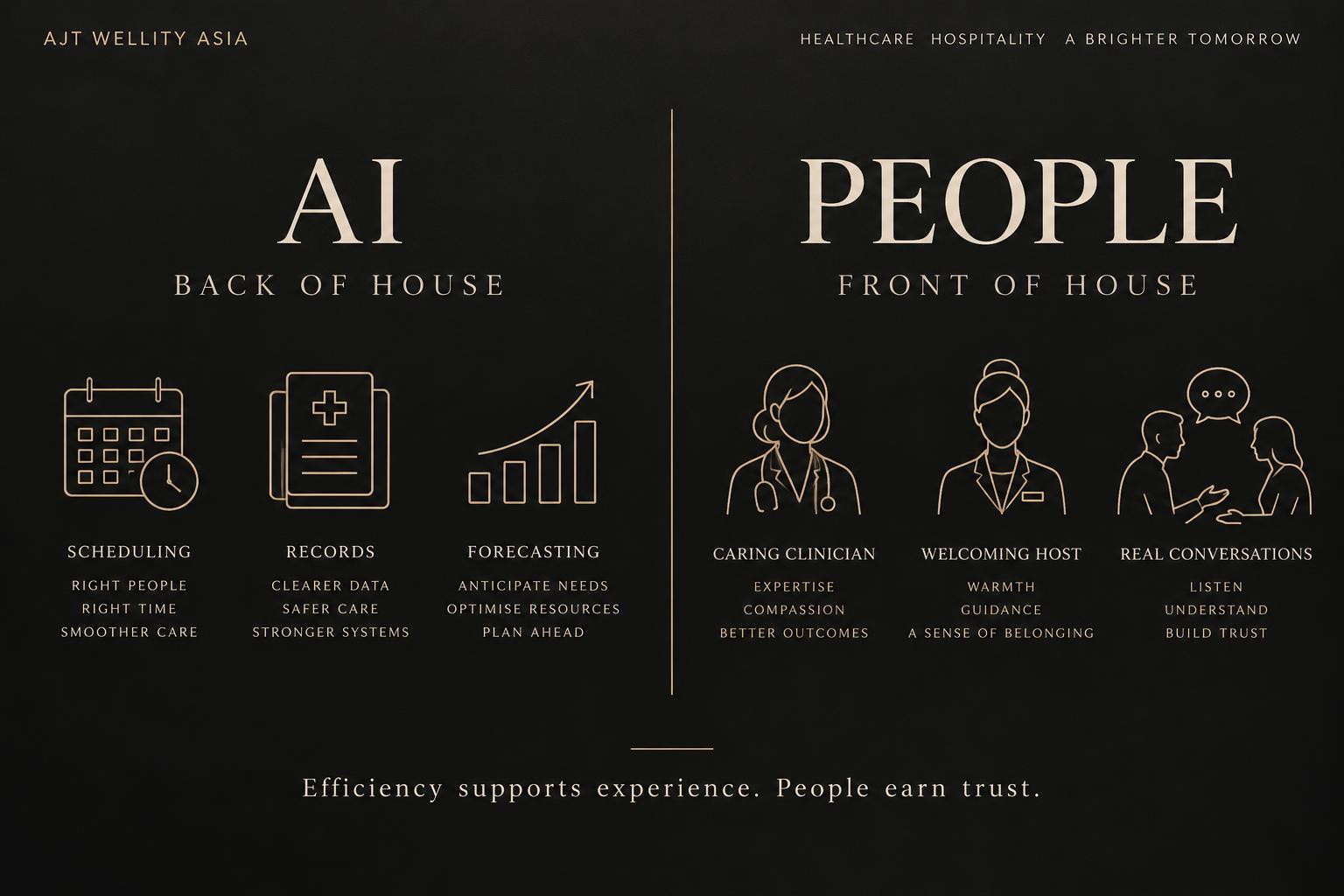
The most successful models we see integrate three layers: a medical core, a hospitality wrapper, and a digital continuity layer that follows the guest home. Each layer reinforces the others.
What this means for investors and operators
For real estate and hospitality owners, longevity clinics represent one of the highest-value anchor uses available today. They extend length of stay, lift average daily rates, and create defensible differentiation in crowded markets. For healthcare operators, the opportunity is to export clinical excellence into asset-light hospitality partnerships.
The window is open, but it will not stay open indefinitely. The markets that move first, with genuine clinical substance, will define the category in Asia for the next decade.