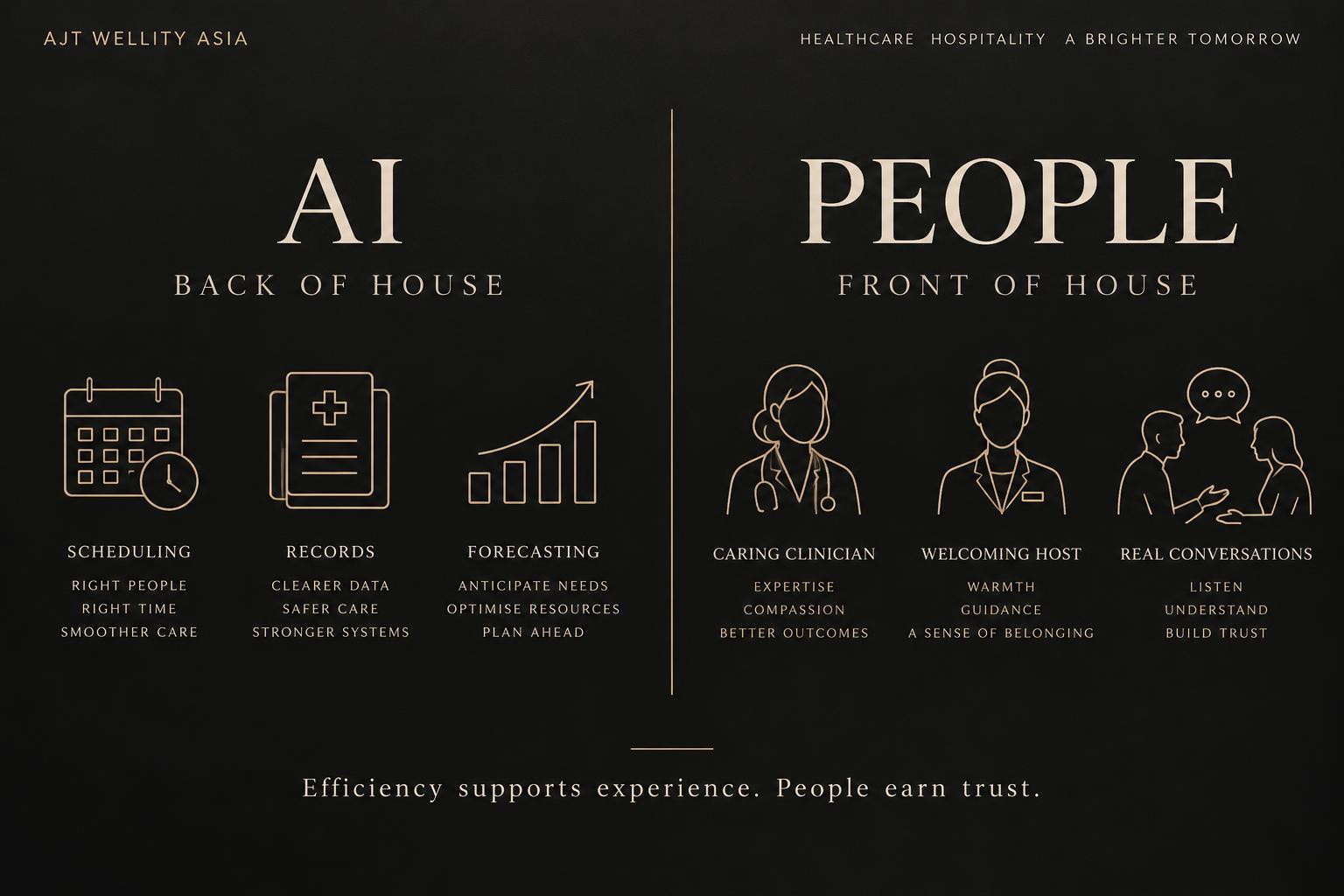

In short
Hotels often select wellness operators as if they were simply tenants, prioritizing a rental income stream over a deeply integrated partnership. This approach creates a fragmented guest experience and leaves significant value on the table. A true partner, by contrast, co-designs the wellness journey, aligns its business model with the hotel's, and integrates its services into the core hospitality offering. Shifting from a landlord-tenant mindset to a collaborative alliance allows properties to build a lasting competitive advantage, increase total guest revenue, and create a wellness ecosystem that guests will return for, long after the initial novelty wears off.
Key takeaways
- Hotels must shift from treating wellness operators as tenants to cultivating them as integrated strategic partners.
- A successful standalone wellness brand may not have the operational DNA to integrate effectively within a hotel environment.
- The right partner focuses on co-creating value and aligning business models, not just occupying space for a fixed rent.
- True integration involves shared KPIs, joint marketing, and a seamless guest journey between hospitality and wellness services.
'''## Why do we see a disconnect between hotel goals and wellness operator performance?
In our work with hotel owners and asset managers across Asia, we consistently see a fundamental mistake: they select and manage wellness operators as tenants, not as strategic partners. The focus is on leasing space and collecting a fixed rent, treating the wellness offering as an amenity with a predictable, but limited, income stream. This landlord-tenant model is the single greatest barrier to unlocking the true commercial potential of integrated wellness. It creates separate silos, a disjointed guest experience, and a ceiling on profitability for both parties.
What defines the "tenant" mindset in wellness partnerships?
The tenant mindset is revealed when the primary metric for success is the rent check. A hotel has a few hundred square metres of underutilized space. The asset manager's goal is to find a "wellness" brand, often a local yoga studio, a facial salon, or a small fitness operator, to fill it. The contract is a standard commercial lease. The operator pays rent, covers their own fit-out and staffing, and runs their business mostly independently. The hotel gets a new facility on its directory, but there is little to no integration with the core hospitality offering.
- Independent Operations: The wellness provider uses their own booking system and has their own customer list.
- Marketing Silos: The hotel might mention the spa in a newsletter, but the operator is largely responsible for their own marketing, creating a separate brand identity.
- Fragmented Guest Journey: A hotel guest is treated like a walk-in customer. There is no shared data, no continuity of care, and no sense that the wellness experience is part of their overall stay.
This approach seems low-risk, but it surrenders the much larger prize: creating a cohesive wellness destination that drives higher room rates, longer stays, and direct-to-brand bookings. A tenant is there to do their business; a partner is there to help you build yours.
How does a true "partner" model differ in practice?
A partnership model starts with a completely different set of questions. Instead of "How much rent can we charge?", the question becomes "How do we co-create an experience that makes the whole property more valuable?". A true partner is evaluated on their ability to integrate, not just operate. This involves a much deeper level of strategic alignment, as we often advise in our Stratix Business Hacking (strategy, feasibility, turnaround) engagements.
Key characteristics of a partnership model include:
- Shared Business Goals: The agreement is often a revenue-share or a hybrid model, where the operator’s success is directly tied to the hotel’s. KPIs are shared, such as capture rate of hotel guests, spend-per-guest, and the impact on room bookings.
- Integrated Programming: The wellness offering is woven into the hotel stay. This could mean pre-arrival consultations, in-room wellness content, and programmes that blend seamlessly with the hotel's F&B and other services.
- Joint Marketing and Sales: The wellness offering is a core pillar of the hotel's brand identity. Marketing campaigns are run jointly, targeting specific customer segments with a unified message. The goal is to sell a complete experience, not just a room or a treatment.
Why might a successful standalone operator be the wrong choice?
This is a critical point that many owners miss. A wellness brand can be wildly successful on its own, with a strong following and profitable standalone centres, but still be the wrong partner for a hotel. Why? Because their business model, operational workflow, and culture are built for a standalone environment.
Consider an urban regenerative clinic. Their model is based on local residents buying multi-session packages. They are not equipped to handle the transient, variable-demand nature of a hotel guest population. Integrating their clinical pathways into a hospitality setting is a complex task that requires a different skill set. It demands expertise in Integrated Hospitality & Wellness Management. The operator who succeeds as a tenant in a commercial building is not automatically the partner you need to elevate your hospitality asset.
What is the commercial consequence of choosing the wrong model?
Choosing a tenant when you need a partner leads to a predictable and disappointing outcome: a costly, underutilized wellness facility that fails to move the needle on core hospitality metrics. The offering becomes a commoditized amenity that guests might use once, but it doesn't create loyalty or pricing power. The hotel misses the opportunity to build a defensible niche in the market, leaving it vulnerable to competitors who get the integration right.
Ultimately, the goal is to build an ecosystem where the hotel and wellness offerings are so intertwined that they become inseparable in the guest's mind. This requires a fundamental shift in thinking, away from the simple landlord-tenant relationship and towards a more ambitious, and far more profitable, model of true strategic partnership. If you are questioning whether your current model is serving your asset, it may be time to Contact AJT Wellity Asia to explore what a genuine partnership could look like. '''
Frequently asked questions
What is the biggest financial mistake hotels make with their wellness space?
The biggest mistake is viewing the wellness space purely as real estate to be leased for the highest possible fixed rent. This "tenant" model caps the upside and ignores the much larger, synergistic value that an integrated wellness partner can create. A true partner, often on a revenue-share model, can dramatically increase total guest spend, drive higher occupancy and room rates, and enhance the asset's overall brand value in ways that a simple rental income stream never could. The focus should be on total profitability, not just rental yield from one part of the property.
We already have a spa operator paying good rent. Why should we change?
If the goal is stable, predictable income from a leased space, then there may be no immediate reason to change. However, you are likely leaving significant money on the table. The real question is: is your spa driving new room bookings, increasing length of stay, or boosting your property's profile as a wellness destination? A true integrated partner contributes to all these metrics, turning the spa from a cost centre or simple amenity into a major revenue and brand driver for the entire hotel. It's about evolving from a landlord to a strategic asset manager.
How can we structure a deal that aligns our interests with a wellness partner?
Move beyond fixed-rent leases. A hybrid model is often most effective: a low base rent to provide security for the operator, combined with a significant percentage of revenue share. This incentivizes the partner to maximize guest capture and spend. Tying a portion of their compensation to hotel-wide metrics, like RevPAR (Revenue Per Available Room) or repeat guest rates, creates even deeper alignment. The key is to create a financial structure where both parties win together by delivering a superior, integrated guest experience that drives overall hotel profitability.